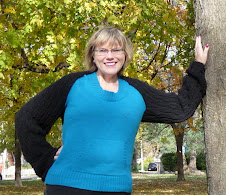
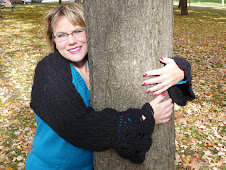
Brenda also gave me permission to post her response to my Summerlicious blog post. Didn't I tell you that I have fantastic friends!
Hey Tish,
Just a thought:
No one can accomplish the high degree of control that you think you are lacking. None of us could stay vigilant 24-7. There is a myth in our culture that 'willpower' is a quality that some of us have and others don't. Failure of your 'willpower' does not reflect a personal failing, but is inevitable. At some point even the most vigilant will succumb to temptation. This is why setting up your environment is so important.
You are doing well--you have set up your friends to help--and some of them actually do this. The next step is to continue to spend time (especially when eating) with those friends who help and to avoid eating with friends who don't. Controlling your environment is much more important (and more reliable) than counting on your willpower.
The problem is, if you find it distressing--you will actually AVOID eating out with your friends who support you (and may actually start to gravitate to those who sabotage your efforts). Bad idea. Your next task is to acknowledge your distress and to put more supports in your environment. For example, here is what I have noticed (from your blog and our weekend):
1. Go out with people who will let you carry a conversation. Use your hands. Think of eating out as a time to talk more than a time to eat.
2. Don't go to "all you can eat" places, buffets, or places with too large portions (this will be hard on Chris!).
3. Wine bars and tapas places are ideal for you. The focus is on small bits and sharing rather than on a large plate of food that people dive into. This way, you don't have to compare what you are NOT eating on your plate to theirs. With a common plate(s) there nothing to compare to!
4. Physically remove the plate and move it out of reach at the first sign of 'doneness'.
5. Have people ruin your leftovers.
6. Start to have a policy where you MUST leave something from each selection on your plate (to counteract the 'clean plate' idea).
7. Don't eat with really hungry people, if you can help it. They will be too focused on the food and not on the company.
Showing posts with label leftovers. Show all posts
Showing posts with label leftovers. Show all posts
Tuesday, July 22, 2008
Sunday, July 20, 2008
Summerlicious & the "I can't believe you did that" moment
Summerlicious; an event in Toronto when restaurants set a fixed price menu.
I had such a great time attending Summerlicious this year. I wasn't able to eat a lot, but I had the chance to try some really interesting restaurants at exceptional prices. However,the topic of today's entry, though it happened during Summerlicious, is not about Summerlicious at all. It's about my reaction to something my friend, Mary, did.

So here we are, at The Citizen. Mary, in the red t-shirt, Mya, in the white blouse and myself. We had a great time! The food was good and the conversation even better.
As the meal progressed and I became full, I pushed my bowl of pasta away from me. However, I really liked my meal and I began to pick at my food. I could feel my stomach become tight and uncomfortable and knew that I needed to stop eating, but could not bring myself to do so. Finally, in desperation, I pushed my bowl to the middle of the table, towards Mary and told her I was full and that she could finish my meal if she wished.
To my abject horror, Mary dumped another bowl of unfinished food on top of my pasta and pushed the dishes towards the end of the table for the waiter to pick up! Though I couldn't eat another bite, I could not believe my emotion response to Mary's destruction of my food. If she or Mya had eaten the pasta, I would have been less appalled! A day later I was still in shock at the event and decided to discuss it with Mary.
I told her about what was going on in my pointy, little head and conveyed my dismay and turmoil. To my surprise, I discovered that her actions had been prompted by the latest entry in my blog that discusses my need, at times, to ask others to "destroy" my leftovers. Well, Mary, being the friend that she is, went ahead and did exactly what needed to be done but I could not bring myself to do. In retrospect, I would have been more comfortable bringing the food home as leftovers and leaving it to rot in the fridge, before I threw it out! But, this experience has brought some really interesting (if not unpleasent) emotions to bare.
I am disturbed about the event for a few reasons
1) That I was not able to push my food away when I knew I was finished
2) That I had such a unwanted emotional response to Mary's actions
3) That there are still lingering waves of that emotional response that I haven't/won't or can't deal with as of yet
So, here I am. Stuck in a place that I am not comfortable being in and feeling a tad out of control, relying on others for strength and trying desperately to develop coping skills that I can act on.
Wish me luck!
Monday, July 16, 2007
Starving Children in Africa
One of the hardest things that I must deal with is leftovers. I am not talking about the 3 cups of fresh tomato sauce that is sitting in a pot on the stove top, but rather the few tablespoons of dinner that I can't eat because my pouch has declared that I am full.
Pre-pouch - I would have just eaten everything on my plate. Fundamentally, this is one of the issues that lead me to being overweight. The internal dialogue that I face follows this logic; "Well there is only a little bit so I might as well finish it off" or "Mmmmmm, this is so good I don't want to stop eating" or "You have to finish the food on your plate" or "It is impolite to leave food on your plate" or " You do not throw food in the garbage" or "There is to little to save as a leftover in the fridge so I better eat it" or better yet "Eat your food. There are starving children in Africa". Consequently, I would overeat.
Where did all this crap dialogue come from?
Some of it is cultural. Have you ever been to an Italian's home for dinner? Each special occasion dinner is at least 6 courses; soup, pasta, meat & vegetables, salad, fruit and finally dessert & coffee. At a wedding add the following courses; appetizer, seafood and a second dessert at midnight.
So if invited to such an event, one must prepare. First, you must know the secret phrases that will halt the appearance of food on your plate or you are doomed. Second, you must starve yourself for at least 24 hours leading up to the dinner so that you are really hungry and ready to eat. To survive at the dinner you do the following; put very small portions of food on your plate so that you can eat all of the first serving while maintaining some room in your stomach. You will need this room for when your "Nonna" (grandmother) inevitably tells you to "mangia" (eat). At this point even if you are still a little bit hungry, you must say that you are full. That way Nonna will only half fill your plate. Then, after the second serving of food and you are full and couldn't eat another bite, you say that you are saving room for dessert. When dessert comes you eat as much as you can and leave some in your dish so that when Nonna tells you to mangia, you can point to the unfinished dessert and say you are stuffed. The key to all this is leaving food on your plate. If you don't leave food on your plate you will be served more food. In spite of all this you will be encouraged to eat yet again because it is inhospitable to leave food on your plate, so after much protest you must finish the dessert. Then, and only then, you be left alone - for a few hours.
So in my culture I was taught that food is important to celebrations and is an intrinsic part of happiness. I was taught that eating and overeating were okay. I was also taught that refusing food was an insult to my host. Now don't get me wrong. I would never suggest that the celebrations that I had with my family were not enjoyable, because they were. I wouldn't even say that I was deliberately taught bad eating habits. I would however say that the practices of my culture did reinforce my skewed perceptions of food, and helped form my own personal bad eating habits.
Some of the dialogue comes from my childhood.
22 years of working with parents and their children have led me to one certain truth; parents have a difficult time watching their children eat. The difficulty may show through in many areas. Some children choose mealtime to practice their ability to say "no" and simply refuse to eat. Some parents worry that their children are just not getting enough food. In both of these situations eating becomes a power struggle in which both parent and child come out as the loser. What inevitably happens is that the child is constantly "encouraged" to eat, often past their internal "full signals". The long term consequence being; children may grow into adults who are no longer able to detect their personal "full signals".
For myself I was encouraged to eat all of the food given to me with "starving children in Africa" statements used as a guilt motivator. One of the more unique things that I remember dealing with, however, was competition for food. This competition was not a result of having too little food, but rather the opposite. My mother is a fabulous cook and, as a youth, there were very few things that I did not like to eat, but I came from a family of six (two sisters, one brother, myself and my parents). If I liked something that mom had cooked, and I wanted seconds of it, I had to eat very quickly so that I could have more. I believe that this is where my distorted fears of somebody taking away my food, or of not having enough food, come from, not to mention my frantic pace when eating.
Some of the dialogue is self-inflicted.
After many years of not experiencing any type of full signals other than pain, I began to work really hard at measuring out normal portions of food and waiting for full signals to present themselves. Once I started becoming sensitive to these signals again, I would on occasion still choose to eat past them, for the simple reason that the food tasted so good. It is obvious to me now that this was a chemical response to the way food made me feel, but I was still unable to cognitively override my biological desire to eat, and instead ended up fabricating justifications for my overeating.
Where does this leave me today? Well, the problem is that after 42 years of eating, I have been conditioned not to leave leftovers, but because my pouch tells me when I am, in no uncertain terms, full, I often end up with leftovers. I end up with a conflict of emotions; one side telling me to finish my food and the other side telling me that I am full and that one extra bite will just make my life miserable. The worst part is knowing that if I try to put that little bit of food in a plastic container to refrigerate it, I will have it eaten before the lid is on.
The only solution that I can think of is to throw the food out. Something which has always caused me waves of panic. Again this has roots in my upbringing. My parents were raised in Italy from 1938 – 1958, and even prior to WWII both families had limited access to food. My grandparents rationed what little they had and no one was able to eat till they were full. Neither family had access to refrigeration; consequently my grandmothers only bought enough food to prepare the meals for the day. No snacking in their houses. My father’s family lived on a farm and though their food was limited it was at least quality food. My mother’s family fared worse. Her father took ill and was not able to work. Each day all five children went without breakfast, had bread with olives or cheese for lunch and had pasta with garlic and oil at night for dinner. Today my mother’s feelings towards food are that it is sacred; a blessing and a sin to waste.
As a result, my parents, out of a need for security, store food all around the house. They have two fridges, that in my entire life I have never seen even half empty. They have a deep freezer packed with food. They have three drawers crammed with canned goods and a closet full of dry goods. There is cold room in the basement that is jammed to the ceiling with home canned goods and they have a huge garden in the back yard that they insist on planting ever year even thought they do nothing but complain about weeding it all summer long. Again, I don't place any kind of blame on my parents for their need to store food. In fact, I understand it very well. Wouldn't you store food, if you grew up without? Rather it is the result of my own skewed perspective in combination with my upbringing that has lead to my aversion to throwing food away.
To be successful, I believe that I must learn to throw my little, itty, bitty, leftovers away, in spite of my feelings. So it is toward this goal that I now labour.
Pre-pouch - I would have just eaten everything on my plate. Fundamentally, this is one of the issues that lead me to being overweight. The internal dialogue that I face follows this logic; "Well there is only a little bit so I might as well finish it off" or "Mmmmmm, this is so good I don't want to stop eating" or "You have to finish the food on your plate" or "It is impolite to leave food on your plate" or " You do not throw food in the garbage" or "There is to little to save as a leftover in the fridge so I better eat it" or better yet "Eat your food. There are starving children in Africa". Consequently, I would overeat.
Where did all this crap dialogue come from?
Some of it is cultural. Have you ever been to an Italian's home for dinner? Each special occasion dinner is at least 6 courses; soup, pasta, meat & vegetables, salad, fruit and finally dessert & coffee. At a wedding add the following courses; appetizer, seafood and a second dessert at midnight.
So if invited to such an event, one must prepare. First, you must know the secret phrases that will halt the appearance of food on your plate or you are doomed. Second, you must starve yourself for at least 24 hours leading up to the dinner so that you are really hungry and ready to eat. To survive at the dinner you do the following; put very small portions of food on your plate so that you can eat all of the first serving while maintaining some room in your stomach. You will need this room for when your "Nonna" (grandmother) inevitably tells you to "mangia" (eat). At this point even if you are still a little bit hungry, you must say that you are full. That way Nonna will only half fill your plate. Then, after the second serving of food and you are full and couldn't eat another bite, you say that you are saving room for dessert. When dessert comes you eat as much as you can and leave some in your dish so that when Nonna tells you to mangia, you can point to the unfinished dessert and say you are stuffed. The key to all this is leaving food on your plate. If you don't leave food on your plate you will be served more food. In spite of all this you will be encouraged to eat yet again because it is inhospitable to leave food on your plate, so after much protest you must finish the dessert. Then, and only then, you be left alone - for a few hours.
So in my culture I was taught that food is important to celebrations and is an intrinsic part of happiness. I was taught that eating and overeating were okay. I was also taught that refusing food was an insult to my host. Now don't get me wrong. I would never suggest that the celebrations that I had with my family were not enjoyable, because they were. I wouldn't even say that I was deliberately taught bad eating habits. I would however say that the practices of my culture did reinforce my skewed perceptions of food, and helped form my own personal bad eating habits.
Some of the dialogue comes from my childhood.
22 years of working with parents and their children have led me to one certain truth; parents have a difficult time watching their children eat. The difficulty may show through in many areas. Some children choose mealtime to practice their ability to say "no" and simply refuse to eat. Some parents worry that their children are just not getting enough food. In both of these situations eating becomes a power struggle in which both parent and child come out as the loser. What inevitably happens is that the child is constantly "encouraged" to eat, often past their internal "full signals". The long term consequence being; children may grow into adults who are no longer able to detect their personal "full signals".
For myself I was encouraged to eat all of the food given to me with "starving children in Africa" statements used as a guilt motivator. One of the more unique things that I remember dealing with, however, was competition for food. This competition was not a result of having too little food, but rather the opposite. My mother is a fabulous cook and, as a youth, there were very few things that I did not like to eat, but I came from a family of six (two sisters, one brother, myself and my parents). If I liked something that mom had cooked, and I wanted seconds of it, I had to eat very quickly so that I could have more. I believe that this is where my distorted fears of somebody taking away my food, or of not having enough food, come from, not to mention my frantic pace when eating.
Some of the dialogue is self-inflicted.
After many years of not experiencing any type of full signals other than pain, I began to work really hard at measuring out normal portions of food and waiting for full signals to present themselves. Once I started becoming sensitive to these signals again, I would on occasion still choose to eat past them, for the simple reason that the food tasted so good. It is obvious to me now that this was a chemical response to the way food made me feel, but I was still unable to cognitively override my biological desire to eat, and instead ended up fabricating justifications for my overeating.
Where does this leave me today? Well, the problem is that after 42 years of eating, I have been conditioned not to leave leftovers, but because my pouch tells me when I am, in no uncertain terms, full, I often end up with leftovers. I end up with a conflict of emotions; one side telling me to finish my food and the other side telling me that I am full and that one extra bite will just make my life miserable. The worst part is knowing that if I try to put that little bit of food in a plastic container to refrigerate it, I will have it eaten before the lid is on.
The only solution that I can think of is to throw the food out. Something which has always caused me waves of panic. Again this has roots in my upbringing. My parents were raised in Italy from 1938 – 1958, and even prior to WWII both families had limited access to food. My grandparents rationed what little they had and no one was able to eat till they were full. Neither family had access to refrigeration; consequently my grandmothers only bought enough food to prepare the meals for the day. No snacking in their houses. My father’s family lived on a farm and though their food was limited it was at least quality food. My mother’s family fared worse. Her father took ill and was not able to work. Each day all five children went without breakfast, had bread with olives or cheese for lunch and had pasta with garlic and oil at night for dinner. Today my mother’s feelings towards food are that it is sacred; a blessing and a sin to waste.
As a result, my parents, out of a need for security, store food all around the house. They have two fridges, that in my entire life I have never seen even half empty. They have a deep freezer packed with food. They have three drawers crammed with canned goods and a closet full of dry goods. There is cold room in the basement that is jammed to the ceiling with home canned goods and they have a huge garden in the back yard that they insist on planting ever year even thought they do nothing but complain about weeding it all summer long. Again, I don't place any kind of blame on my parents for their need to store food. In fact, I understand it very well. Wouldn't you store food, if you grew up without? Rather it is the result of my own skewed perspective in combination with my upbringing that has lead to my aversion to throwing food away.
To be successful, I believe that I must learn to throw my little, itty, bitty, leftovers away, in spite of my feelings. So it is toward this goal that I now labour.


Subscribe to:
Posts (Atom)